
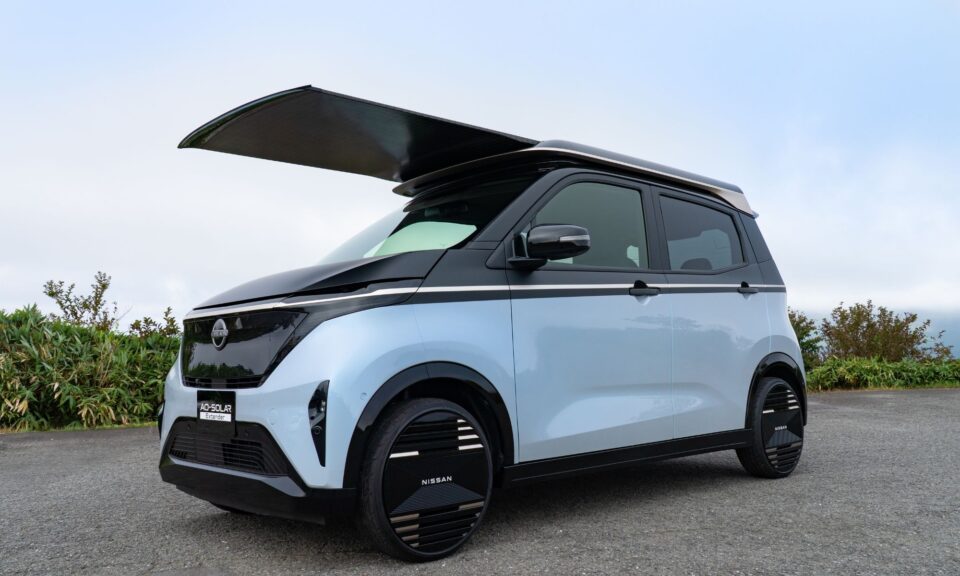
In 2025, Nissan is giving its popular kei-car, the Sakura, a significant technological upgrade that could reshape how small electric vehicles are used in cities.
The new Ao-Solar Extender system—a dual-panel solar roof designed specifically for the compact Sakura EV—promises to generate up to 500 watts of solar power under optimal sunlight.
Nissan claims that this innovation could provide drivers with as much as 3,000 kilometers (1,864 miles) of additional range per year without plugging into the grid.
For urban commuters and short-distance drivers, that could mean nearly eliminating the need for external charging altogether.
This system is not science fiction or a concept-only prototype. It’s a near-production innovation that leverages Japan’s dense sunlight hours and urban lifestyle patterns, making the Sakura one of the first truly self-sustaining city cars in the world.
The Technology Behind the “Ao-Solar Extender”
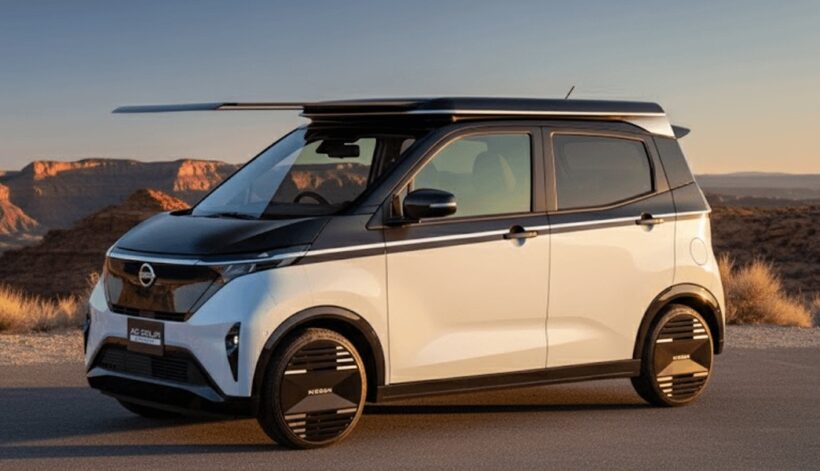
The solar upgrade features two panels: a fixed roof panel and a retractable, deployable one that extends when the vehicle is parked. Together, they generate up to 500 W in full sun.
When the car is in motion or the extendable panel isn’t deployed, the system still produces about 300 W. Even in cloudy weather, it can manage around 80 W, ensuring that the car is almost always charging, however slightly.
For reference, the Sakura’s compact 20 kWh battery gives it a range of about 180 kilometers (112 miles) per full charge. If the solar panels add around 2 kWh per day under ideal conditions, that’s roughly 10 % of the battery—a meaningful amount for city driving. Over a year, the system can generate enough energy to drive approximately 2,900–3,000 km, depending on sun exposure and location.
For many Japanese urban drivers who travel just 10 km a day, this could cover their entire routine without plugging in. The Sakura could, in practice, recharge itself while parked at work or at home, using only sunlight.
Efficiency in Context
The upgrade represents more than just an eco-friendly gimmick. It’s a quiet acknowledgment that EV design must evolve toward energy independence.
While fast charging networks expand worldwide, urban EVs like the Sakura face different challenges—limited parking, short commutes, and rising electricity costs. Nissan’s solution aims to offset grid dependency without adding charging inconvenience.
If the Sakura sits under direct sunlight for five hours, it can generate roughly 2 kWh, enough for 15 to 20 km of driving range. On an annual scale, that translates to an extra 3,000 km—effectively adding another month of driving for free.
The solar panels also act as a thermal shield when deployed, keeping the cabin cooler and reducing air-conditioning load, which further improves energy efficiency. For a lightweight kei car, even small gains like this translate into noticeable real-world benefits.
The Real-World Limits
No solar car system is perfect, and Nissan admits the results vary by region and lifestyle. Drivers in northern Japan or cloudy climates will see less benefit.
Those who park underground or in shaded areas will gain little from the panels. Even in sunny conditions, efficiency losses from conversion and charging systems mean only part of the generated power reaches the battery.
But context matters. A 500 W solar roof won’t power a long-range SUV or cover highway trips. It can, however, make a small city EV dramatically more self-reliant.
The Ao-Solar Extender was designed precisely for drivers who do frequent, short trips—shopping, commuting, school runs—where charging once a week feels unnecessary and wasteful.
How It Compares to Other Mobility Trends
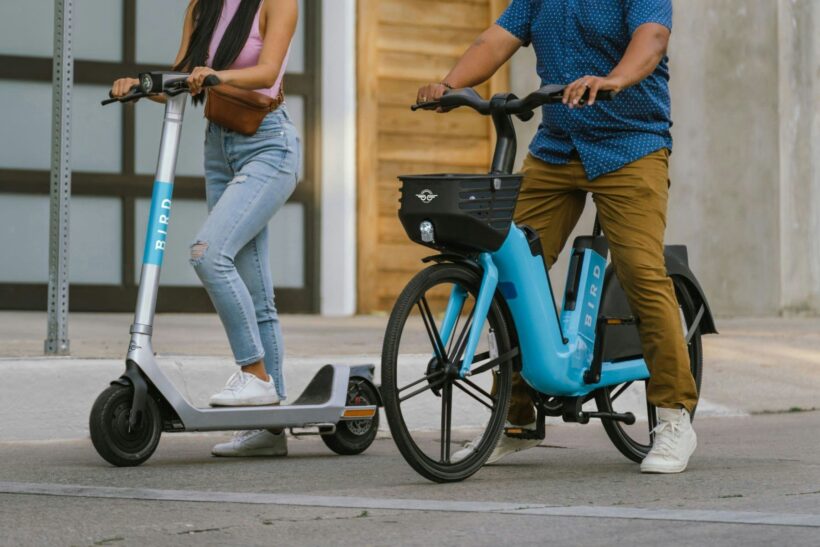
The Sakura’s upgrade reflects a broader shift in how urban mobility is evolving. Lightweight electrification is no longer limited to cars. Compact electric bikes and e-scooters already dominate micro-mobility in dense cities, offering efficient, low-maintenance alternatives for short distances.
The Sakura fits right alongside this movement, serving drivers who need the protection and comfort of a car but want the self-charging freedom of an e-bike.
Both trends point toward the same future: small, efficient vehicles powered directly by renewable sources. Where e-bikes charge overnight on a single plug, the Sakura quietly charges under the sun, blurring the line between personal transportation and independent energy systems.
Data Snapshot: Solar Roof Performance on Nissan Sakura
| Parameter | Value | Notes |
| Max Power Output (Full Sun) | 500 W | Fixed + deployable panels |
| Typical Power (Driving / Partial Sun) | 300 W | Fixed panel only |
| Cloudy Conditions | 80 W | Minimal charging still active |
| Battery Capacity | 20 kWh | Standard Sakura battery |
| Base Range (WLTC) | 180 km | Without solar |
| Annual Added Range | 2,900–3,000 km | Nissan test estimate |
| Equivalent Daily Gain | 8 km/day | Under ideal sunlight |
| Cost | TBD | Not yet announced |
| Status | Prototype (pre-release) | Launch expected in Japan first |
Beyond the Hype: How Practical Is It?
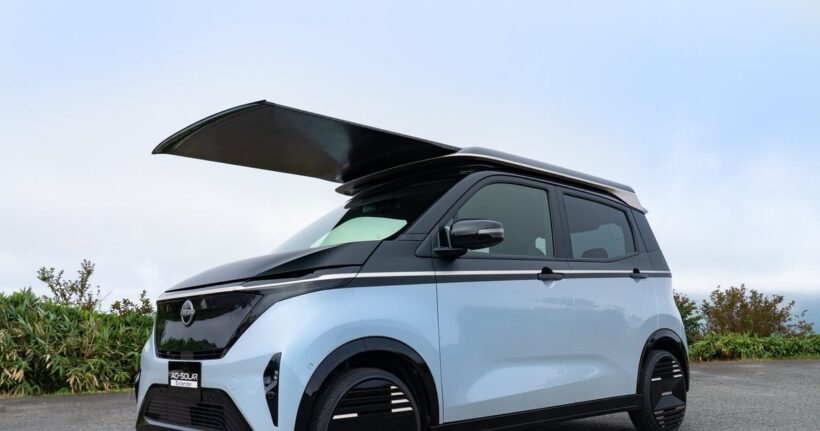
In Japan’s sunlight-rich southern regions, or in similarly bright climates like California or southern Europe, the solar roof could indeed replace most routine charging for city drivers. But in Central Europe or northern cities with long winters, expect roughly half that benefit—still meaningful, but not a full replacement for home or public charging.
Because the Sakura’s battery is small, the solar input has proportionally larger impact. Adding 2 kWh of energy to a 20 kWh pack is substantial, while the same system on a 60 kWh EV would barely make a dent.
That’s why Nissan’s kei-car lineup is the logical starting point for this innovation.
Durability and long-term degradation remain unknowns. Solar panels typically lose 10–15 % efficiency over ten years, and the additional wiring, weight, and moving panel mechanism will require testing under real-world conditions.
Still, Nissan’s concept vehicle shows strong intent to commercialize, and early reports indicate the company is preparing production trials for 2026.
Conclusion
The Nissan Sakura Solar Roof Upgrade is more than a design experiment—it’s a realistic next step in sustainable city mobility. With up to 500 W of solar generation and roughly 3,000 km per year of extra range, it can drastically cut grid reliance for short-trip drivers.
While not a replacement for plug-in charging, it provides meaningful autonomy for urban lifestyles and could inspire a new wave of small, self-charging vehicles.
