
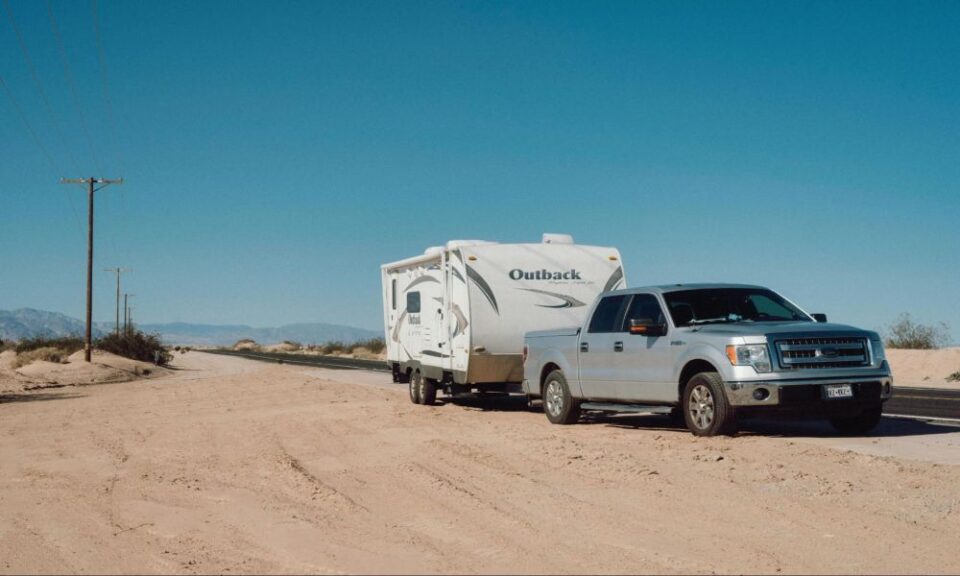
Whether you’re parking your travel trailer after summer road trips or putting it away for the off-season, proper preparation prevents costly damage and security risks. From draining water systems to protecting tires and sealing entry points, each step plays a role in keeping your rig ready for its next adventure. This guide covers every phase of extended trailer storage, so nothing gets overlooked.
How to Protect Your Travel Trailer From Theft During Storage
A travel trailer sitting idle for weeks or months becomes a target. Theft and vandalism spike during off-season periods when storage lots see less foot traffic and owners visit less frequently.
To reduce that risk, locking the coupler before parking the trailer for the season is one of the most effective deterrents. Companies like AMPLock offer a high-quality trailer lock built from CNC-machined steel that fits custom to the coupler, leaving no gap for pry bars or bolt cutters. Starting with a physical lock at the hitch point gives owners reliable protection from day 1 of storage.
What Security Measures Keep a Stored Trailer Safe?
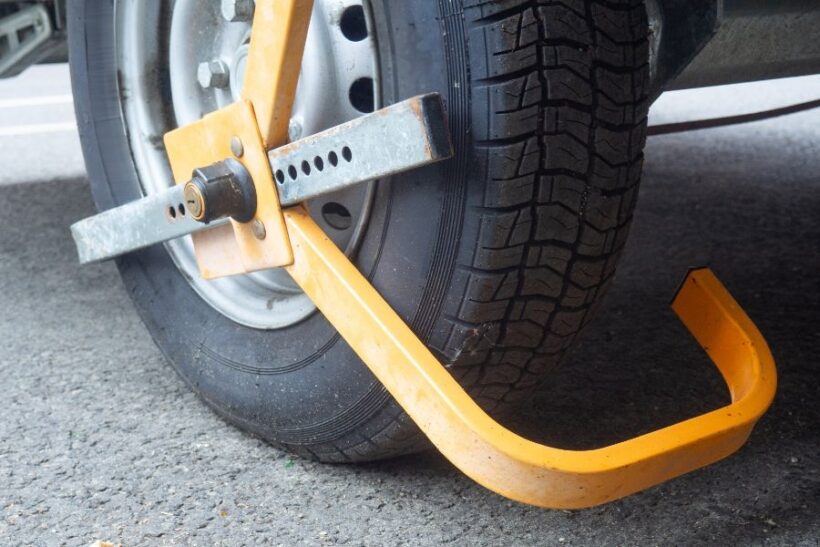
Layered security works better than any single device. A coupler lock prevents the trailer from being hitched and towed away. A wheel lock or boot immobilizes the axle. Combining both forces a thief to defeat 2 separate systems, which increases time on-site and the risk of getting caught.
Visible deterrents matter too. Motion-activated lights, GPS trackers, and trail cameras all raise the difficulty level. GPS tracking gives owners real-time location alerts if the trailer moves, while cameras capture activity even at remote storage sites.
Where Should You Store a Travel Trailer Long-Term?
A fenced, gated facility with security cameras and controlled access offers the highest level of protection. Some facilities provide covered or enclosed spots that shield the trailer from both weather and prying eyes.
Storing on private property is another option. A well-lit driveway with clear sightlines from the house deters casual theft. If the trailer sits on rural land or a shared lot, a hitch lock and wheel boot become even more important, since response times from law enforcement tend to be longer.
What Steps Are Needed to Winterize a Travel Trailer’s Plumbing?
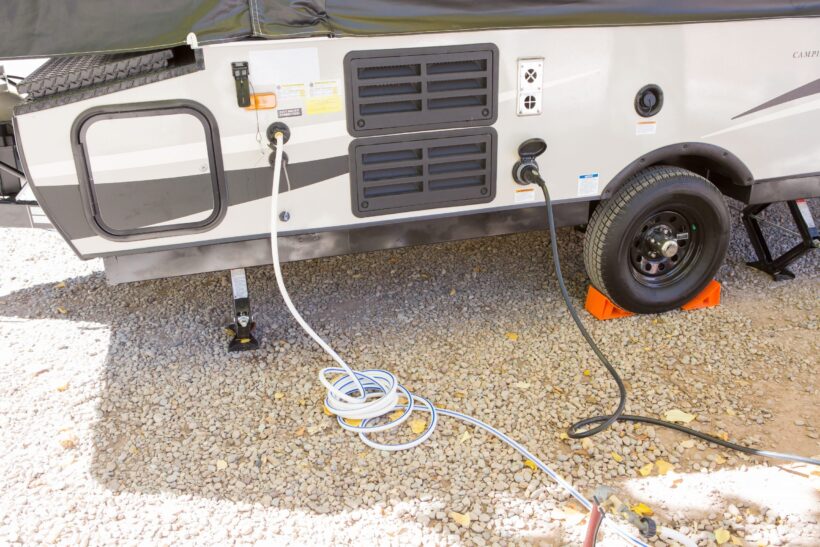
Water left inside pipes, tanks, and fittings expands when it freezes. That expansion cracks fittings, splits hoses, and ruptures holding tanks. Winterizing the plumbing system is the single most important step before cold-weather storage.
How to Drain and Bypass the Water Heater
Start by turning off the water heater and letting it cool completely. Open the drain plug at the bottom of the unit and let all water flow out. Remove the anode rod if your model uses one, and inspect it for heavy corrosion. A worn anode rod should be replaced before the next season.
Install a water heater bypass kit if one isn’t already in place. This kit redirects antifreeze around the heater tank, saving several litres of RV-rated antifreeze during the winterization process.
How to Protect Pipes and Tanks From Freezing
Open all faucets, including the outdoor shower if equipped, and let remaining water drain by gravity. Use the low-point drain valves under the trailer to empty the hot and cold lines fully.
Pump non-toxic RV antifreeze through the entire system. Start at the water pump inlet and open each faucet one at a time until pink fluid flows out. Flush the toilet until antifreeze appears in the bowl. Pour a small amount down each drain to protect the P-traps.
How to Prepare the Exterior of a Travel Trailer for Storage
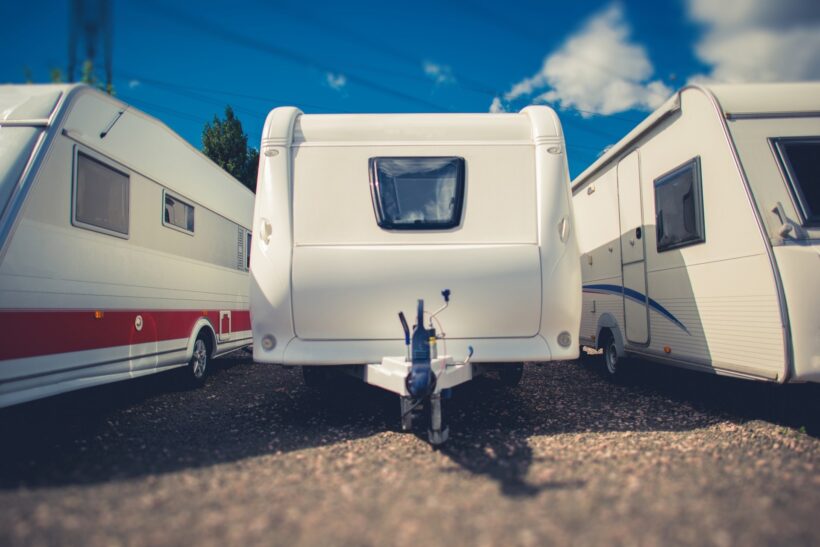
The exterior shell is the trailer’s first line of defence against moisture, UV damage, and pest intrusion. A thorough inspection before storage prevents small issues from becoming expensive repairs.
Roof, Seams, and Sealant Inspection
Climb up and walk the roof carefully. Check every seam, vent, antenna mount, and skylight for cracked or peeling sealant. Reseal any gaps with a self-leveling lap sealant rated for your roof material (rubber, fiberglass, or aluminum).
Clean the roof surface with a manufacturer-approved cleaner. Dirt and debris trap moisture against the membrane, which accelerates deterioration over months of storage.
Do Travel Trailer Covers Prevent Long-Term Damage?
A breathable, UV-resistant cover reduces sun damage to decals, paint, and rubber seals. It also keeps leaves, bird droppings, and tree sap off the roof.
The cover must fit properly. A loose cover flaps in the wind and abrades the finish. A too-tight cover traps moisture underneath. Look for covers with reinforced corners, adjustable straps, and zippered access panels that let you check on the trailer without removing the entire cover.
What Interior Prep Prevents Mold and Pest Damage?
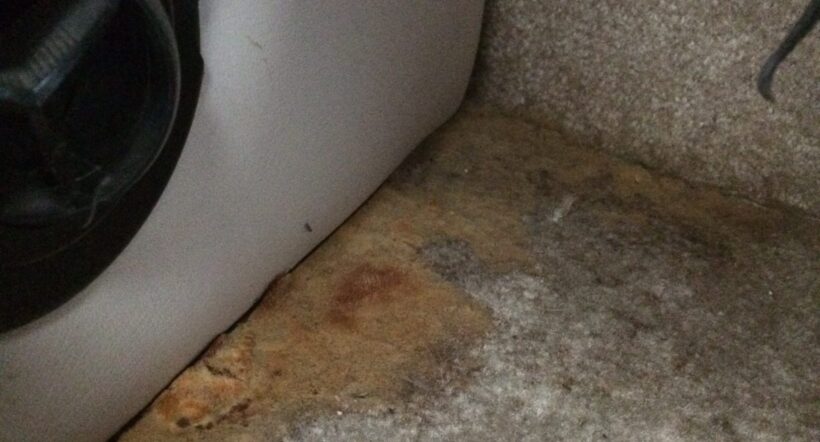
A sealed, dark, and still environment is exactly what mold spores and pests need to thrive. Interior preparation focuses on removing moisture sources and blocking entry points.
Cleaning, Ventilation, and Moisture Control
Remove all perishable food, including canned goods that could freeze and burst. Clean the refrigerator, leave the door propped open, and turn the unit off. Wipe down all countertops, sinks, and bathroom surfaces.
Place moisture-absorbing products (desiccant buckets or dehumidifier bags) in the main living area, bathroom, and any enclosed storage compartments. If the storage location has electrical access, a small plug-in dehumidifier set to cycle automatically provides the most consistent protection.
Crack a roof vent slightly to allow air circulation, but add a vent cover to keep rain and snow out.
How to Keep Rodents and Insects Out of a Stored Trailer
Mice can squeeze through a gap the size of a dime. Inspect the underside of the trailer for any opening around plumbing lines, wiring harnesses, and slide-out mechanisms. Seal gaps with steel wool, expanding foam, or purpose-built RV pest barriers.
Inside, place cotton balls soaked in peppermint oil near entry points. Avoid poison baits inside the trailer, since a dead mouse in an inaccessible cavity creates an odour problem that can last weeks. Snap traps placed along walls are a safer alternative.
Tire and Suspension Care for Extended Parking
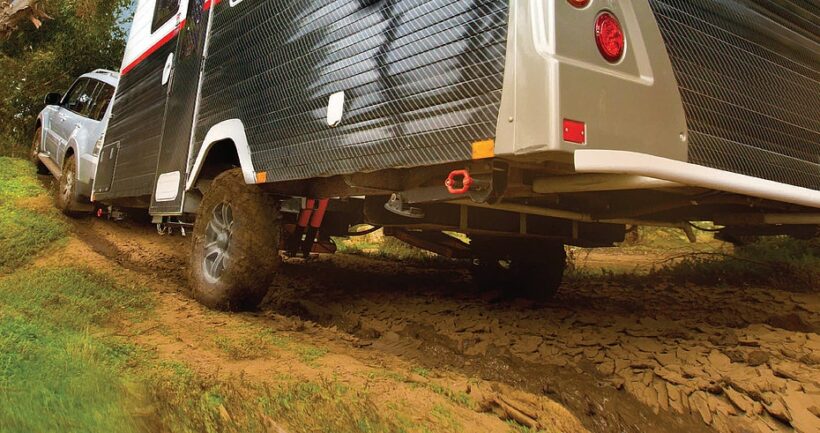
Tires and suspension components degrade when a trailer sits stationary for months. Flat spots, sidewall cracking, and spring sag are all preventable with basic prep work.
What Tire Pressure and Positioning Prevent Flat Spots?
Inflate all tires to the maximum pressure listed on the sidewall (not the lower “road” pressure). Higher pressure distributes weight more evenly across the tread and reduces the contact patch that causes flat spots.
Park on a hard, level surface. Soft ground like grass or dirt lets tires sink, creating uneven pressure and trapping moisture against the rubber. If a paved surface isn’t available, place plywood or heavy-duty tire pads under each tire.
Cover the tires with UV-blocking covers. Sunlight breaks down the rubber compounds in sidewalls, leading to dry rot and cracking that shortens tire life.
Should You Use Jack Stands or Wheel Chocks?
Jack stands relieve weight from the tires and suspension, which helps prevent both flat spots and spring fatigue. Position them under the trailer’s frame rails, not under the axle, unless the manufacturer’s manual specifies otherwise.
Wheel chocks prevent any rolling movement, especially on slight inclines. Use chocks on both sides of at least 1 tire, even when the trailer is on level ground. A sudden shift during storage can stress the hitch, coupler, and stabilizer jacks.
Battery and Electrical System Storage Tips
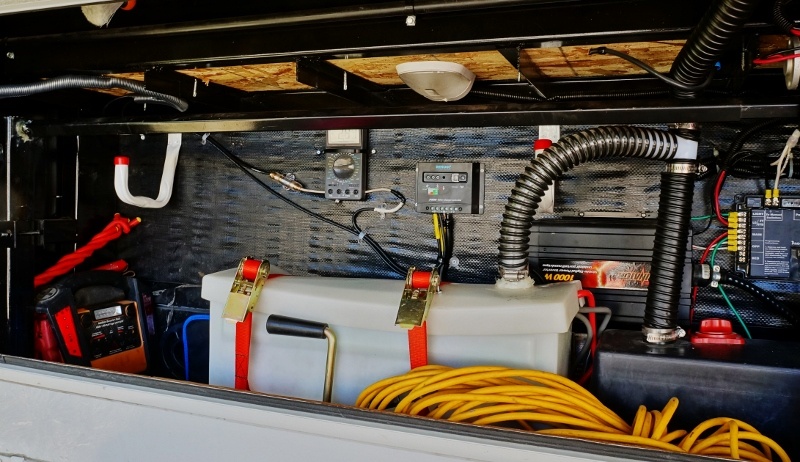
A dead or damaged battery is one of the most common issues trailer owners face when pulling a rig out of storage. Proper disconnection and maintenance keep the battery healthy and ready for the next trip.
How to Disconnect and Maintain a Trailer Battery
Disconnect the negative terminal first, then the positive. Clean both terminals and cable ends with a baking soda solution to remove corrosion. Apply a thin layer of dielectric grease to prevent oxidation during storage.
Store the battery in a cool, dry location where temperatures stay above freezing. A fully charged battery resists freezing down to roughly -50°C, but a partially discharged battery can freeze at -10°C or warmer. Use a battery maintainer (trickle charger) to keep the charge level between 80% and 100% throughout the storage period.
Protecting Wiring and Solar Components From Weather
Inspect all exterior wiring connections for signs of corrosion, fraying, or loose terminals. Apply dielectric grease to exposed connectors and wrap damaged sections with self-fusing silicone tape.
If the trailer has rooftop solar panels, disconnect them from the charge controller to prevent overcharging an unmonitored battery. Clean the panel surfaces before covering or storing the trailer, since dirt buildup reduces output when the system is reconnected.
Appliance and Propane System Shutdown Checklist
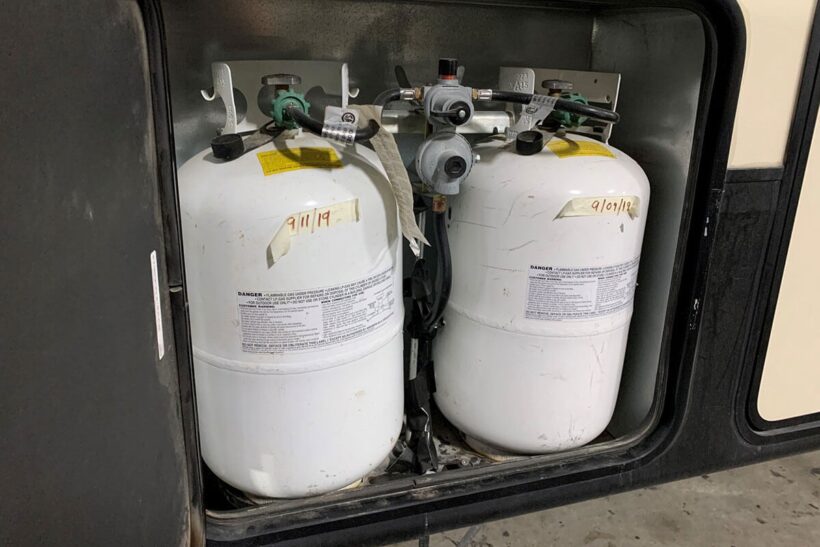
Propane systems require careful shutdown to avoid leaks, regulator damage, and safety hazards during extended storage.
How to Safely Store Propane Tanks and Lines
Turn off all appliances that run on propane: the furnace, water heater, stovetop, and refrigerator. Close the main valve on each propane tank. If the tanks are removable, take them off the trailer and store them upright in a ventilated outdoor area, away from direct sunlight and heat sources.
Inspect the supply lines and regulator for cracks or brittleness. A cracked regulator diaphragm can cause a leak the moment the system is pressurized again. Replacing a worn regulator before storage is simpler and safer than discovering a leak at the start of the next season.
Creating a Pre-Storage and De-Storage Inspection Schedule
A written checklist makes the process repeatable and prevents skipped steps. Split the list into 2 phases: a storage-prep checklist and a de-storage startup checklist.
The storage-prep list should follow the order in this guide: security, plumbing winterization, exterior sealing, interior cleaning, tires, battery, and propane shutdown. Check off each item as it’s completed and note any repairs that need attention before the next trip.
The de-storage list reverses the process: reconnect the battery, pressurize the water system and check for leaks, inspect tires and inflate to road pressure, test all appliances, and verify that running lights and brakes function correctly. A short test drive around the storage lot helps identify any suspension or brake issues before hitting the highway.
Frequently Asked Questions About Travel Trailer Storage Preparation
How Long Can a Travel Trailer Sit in Storage Without Maintenance?
Most travel trailers can sit for 3 to 6 months without issues if properly winterized and secured. Beyond 6 months, schedule a mid-storage check to verify tire pressure, battery charge, and moisture levels inside the cabin.
What Is the Best Way to Prevent Tire Damage on a Stored Trailer?
Inflate tires to maximum sidewall pressure, park on a hard surface, use UV-blocking tire covers, and consider jack stands to relieve weight. These 4 steps address flat spots, dry rot, and sidewall cracking.
Do You Need to Run a Travel Trailer’s Engine or Generator During Storage?
Travel trailers don’t have engines, so this only applies to built-in generators. Running a generator for 15 to 20 minutes once a month prevents fuel system gumming and keeps seals lubricated. Add a fuel stabilizer to the tank if the generator won’t be run during storage.
