
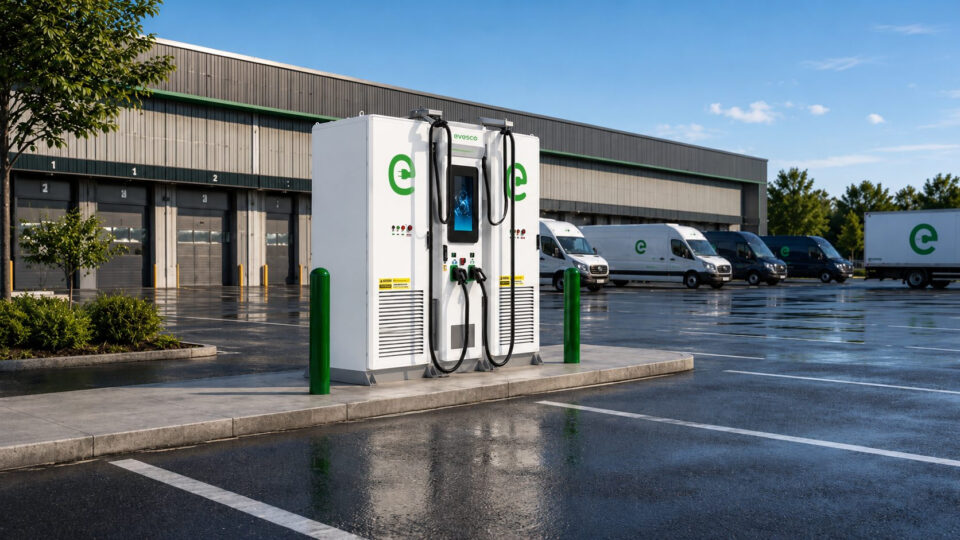
The transition to zero-emission commercial fleets is accelerating at an unprecedented pace, driven by ambitious corporate sustainability goals, drastically lower long-term maintenance costs, and tightening regulatory mandates.
But as fleet managers trade diesel pumps for electric vehicle depots, they quickly crash into a significant, often unanticipated roadblock—electrical infrastructure.
Powering a depot full of medium- or heavy-duty electric delivery trucks requires a tremendous amount of electricity. When exploring EV charging solutions, operators have historically relied heavily on standard direct current (DC) fast chargers, which demand massive grid upgrades.
However, a newer, significantly more agile technology is rapidly emerging as a frontrunner in the commercial space: the battery-integrated charger (BIC).
If you are planning your fleet’s electric future, understanding the core advantages of battery-integrated systems over traditional grid-tied equipment could save your operation months of delays, prevent massive utility bills, and save millions in infrastructure costs.
The Infrastructure Bottleneck of Traditional DC Fast Chargers
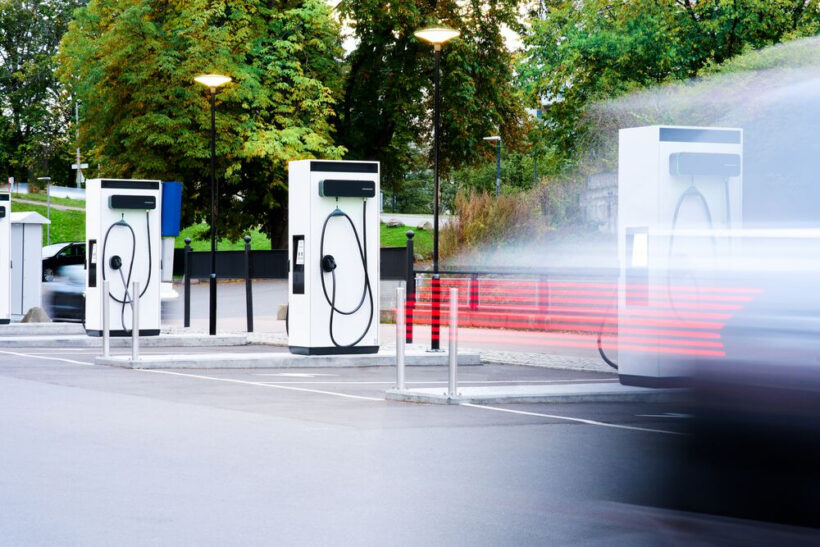
Traditional DC fast chargers are undeniably powerful, delivering anywhere from 50 kW to well over 350 kW of energy directly to an electric vehicle’s battery for rapid refueling.
However, pulling that much raw power instantaneously from the commercial grid creates massive logistical and financial hurdles for fleet operators.
- Lengthy Timelines: Installing high-power traditional chargers almost always requires extensive utility upgrades. Upgrading local transformers, installing new heavy-duty switchgear, securing complex site certifications, and trenching through concrete for heavy-duty conduits can easily stall fleet electrification projects for 18 to 24 months.
- Exorbitant Capital Expenditures (CapEx): The civil engineering, trenching, and utility upgrade costs often completely eclipse the cost of the charging hardware itself, ruining early budget projections and tying up crucial operating capital.
- Punishing Demand Charges: Commercial electricity rates are heavily influenced by peak demand, which is the maximum amount of power drawn at any given 15-minute interval during a billing cycle. Having multiple traditional DC fast chargers operating simultaneously can trigger staggering demand charges, completely destroying the total cost of ownership (TCO) advantage that electric fleets are supposed to provide.
The Antidote Provided by Battery-Integrated Chargers
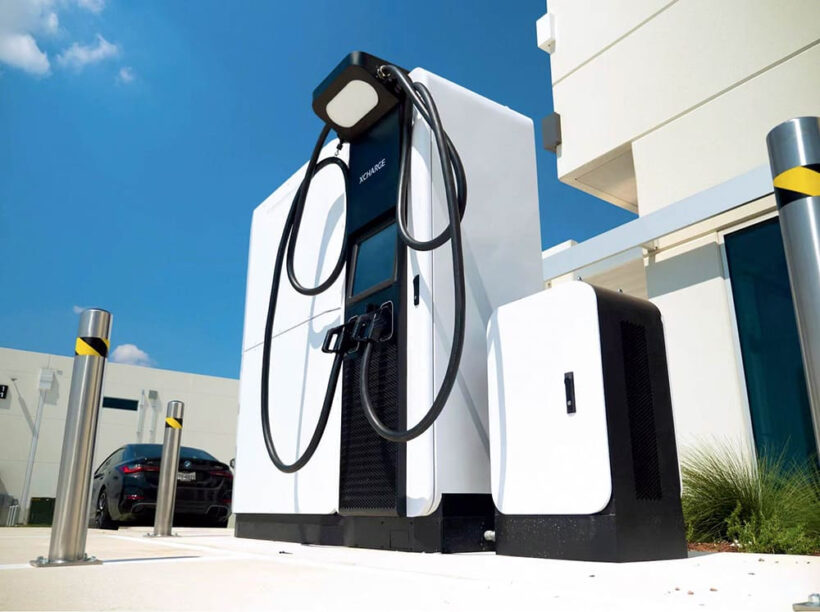
Battery-integrated charging systems elegantly solve these issues by combining onboard energy storage (typically a robust lithium-ion battery buffer) with standard DC fast charging power electronics.
Instead of pulling high-voltage power directly from the grid to the vehicle, the charger’s internal battery slowly sips power from a standard, lower-voltage grid connection around the clock.
When an electric truck plugs in, the charger dispenses energy rapidly from its internal battery directly to the vehicle.
This brilliant decoupling of the electrical grid from the vehicle unlocks a host of powerful advantages for fleet operators.
Deployment in Days Instead of Years Because battery-integrated chargers can connect to existing low-power electrical infrastructure, they bypass the need for massive utility upgrades.
Fleet operators can often install these self-contained systems using standard surface mounts without tearing up their yards for heavy trenching or pouring thick concrete pads.
This allows vehicle procurement and charger installation to happen in tandem, ensuring charging infrastructure is actually ready the moment the new trucks arrive on the lot.
Slashing Peak Demand Charges and OpEx The financial advantage of an internal battery buffer cannot be overstated.
By constantly drawing a low, steady stream of power, integrated systems completely avoid the massive consumption spikes that trigger utility demand charges.
Furthermore, fleet managers can leverage intelligent energy management software to charge the internal battery during off-peak nighttime hours when electricity is cheap, and dispense it into vehicles during expensive peak daytime hours. This strategic process, known as peak shaving, dramatically lowers operational expenditures.
Agility and Asset Portability Many fleet operations run out of leased facilities or utilize short-term third-party logistics centers.
Sinking millions of dollars into permanent civil electrical upgrades at a temporary site results in stranded capital.
Battery-integrated chargers are self-contained and often feature a remarkably compact footprint. If a fleet needs to relocate to a new depot, or simply reorganize their current yard, these units can simply be unbolted, picked up with a forklift, and moved to the new location, fully protecting your initial hardware investment.
Enhanced Grid Resilience In urban or remote areas with highly constrained grid access, integrating a buffer battery optimizes existing charging infrastructure while ensuring stable and predictable charging for your fleet. The stored energy acts as a crucial buffer against grid volatility.
In the event of a brief power outage or brownout, the internal batteries can often still dispense their stored energy, ensuring that grid unreliability doesn’t disrupt tight delivery logistics and schedules.
A Clear Contrast in Deployment Strategy
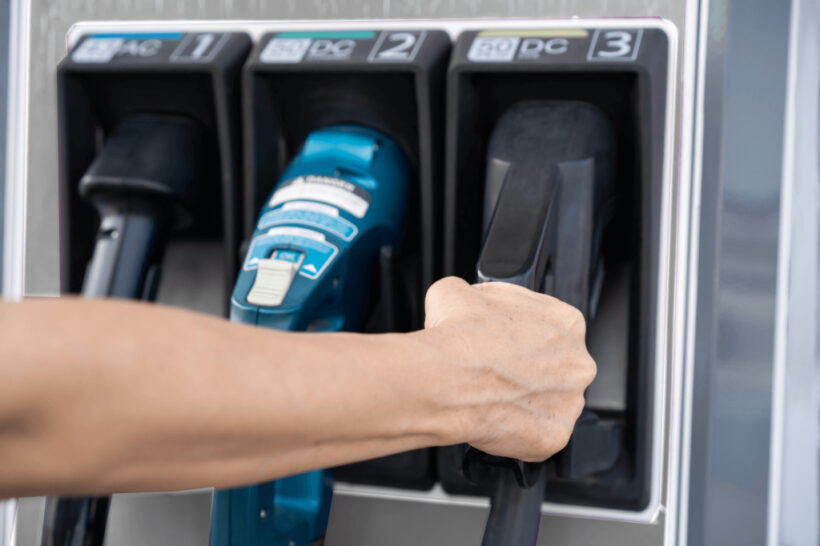
When comparing these two approaches, the operational differences become stark. Traditional DC fast chargers demand very high grid power (480V+ and high amperage), whereas battery-integrated chargers operate comfortably on low to moderate power, utilizing existing electrical setups.
This difference in power draw dictates the entire deployment timeline. A traditional installation can drag on for one to two years due to utility upgrades and extensive civil work, including deep trenching and permanent concrete foundations.
Conversely, a battery-integrated setup can be operational in a matter of days or weeks using simple plug-and-play surface mounts.
Furthermore, while traditional setups leave operators vulnerable to peak demand charges and strand capital in permanent fixtures, integrated chargers eliminate demand charge risks and offer highly portable, redeployable assets that can be effortlessly relocated to meet changing business needs.
Powering the Future of Freight
While traditional grid-tied DC fast chargers will always have a vital place in heavy-duty highway corridor charging and highly optimized, permanent megawatt logistics hubs, they are not always the right tool for every local fleet depot.
Electrifying fleet operations isn’t just about buying better, cleaner vehicles; it is equally about deploying smart, financially viable, and flexible infrastructure.
By choosing battery-integrated chargers, forward-thinking fleet operators can bypass crippling utility delays, neutralize volatile peak energy costs, and maintain the operational agility required to thrive in the competitive landscape of modern logistics.
