
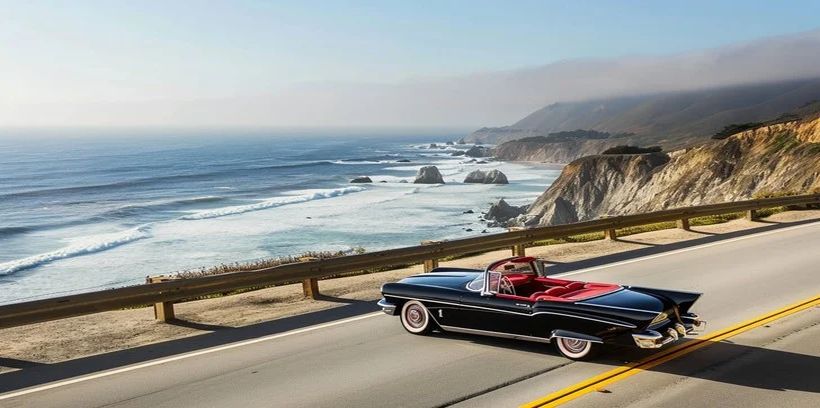
A machine can be engineered to perfection and still struggle when it meets the real world. Roads, air, usage patterns, and even how long something sits untouched quietly influence outcomes. In places like Virginia Beach, vehicles don’t just age by mileage—they evolve by environment. For owners, operators, and decision-makers, understanding this difference is where long-term reliability, smarter investment, and true mechanical expertise begin.
1. Salt-Mist Transmission Housing Corrosion
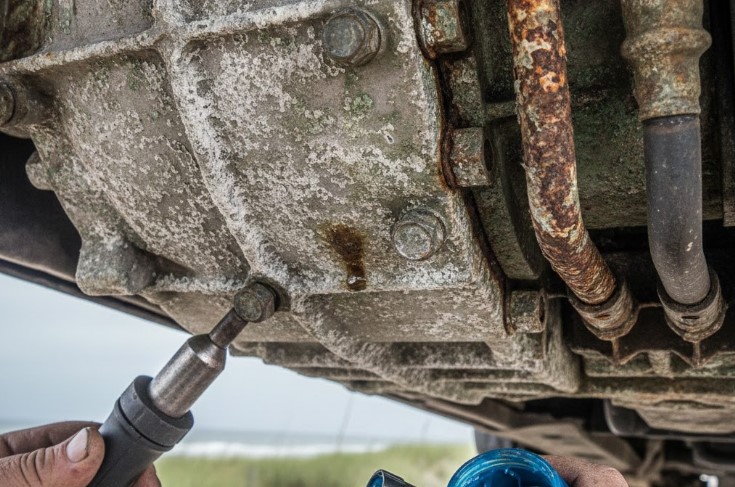
In Virginia Beach, corrosion doesn’t announce itself dramatically. It works patiently, invisibly, and often far from winter roads. Aerosolized sea salt rides coastal winds and settles into places drivers never see—transmission housings, steel fluid lines, and fasteners.
What that means in real life:
- Aluminum housings and steel lines quietly start fighting each other
- Bolts don’t loosen—they fuse
- Leaks don’t drip; they weep and get dismissed
This is where amateurs snap fasteners and professionals pause. Auto Mechanic Virginia Beach VA experts use induction heat with restraint, knowing aluminum doesn’t forgive impatience. They protect connectors with marine-grade dielectric compounds because they’ve seen “perfectly fine” modules fail six months later. Around here, corrosion control isn’t cosmetic—it’s strategic foresight. This isn’t about fixing a failure; it’s about preventing a cascade of them. In coastal markets, corrosion management becomes a strategy, not a line item.
2. Tidal Surge Intrusion and Submersion Recovery
Virginia Beach flooding isn’t always dramatic. A high tide, blocked drain, or unexpected surge can leave a car partially submerged just long enough to do lasting damage.
Why it’s deceptive:
- Transmission vent tubes allow water ingress without visible flooding
- Fluid emulsifies, destroying clutch friction bonding
- Engines may ingest water without immediate failure symptoms
Here, expert intervention matters;
True recovery requires diagnostic discipline. Advanced transmission exchange machines—not gravity drains—are essential to remove contaminated fluid trapped in torque converters and valve bodies. On the engine side, professionals like London Bridge Auto And Transmission Repair Shop Virginia Beach slow the process down, performing static compression and leak-down tests before a restart. Experience here is measured by restraint. Knowing when not to turn a key can save an entire powertrain.
3. Humidity-Driven Internal Sludge Formation
Virginia Beach humidity doesn’t stop at door seals. Daily temperature swings cause internal condensation, especially in vehicles driven short distances.
The hidden damage progression:
- Moisture accumulates in oil and PCV systems
- Sludge restricts lubrication to valvetrain and turbo components
- Damage develops long before warning lights
A refined maintenance philosophy:
What separates serious shops from service counters is honesty. They shorten oil intervals not because the oil “failed,” but because the environment demands it. They use borescopes to look instead of guessing. This is maintenance that respects chemistry, not marketing. You’re not over-servicing—you’re staying ahead of physics. This is modern diagnostics at its best—evidence-based, minimally invasive, and forward-looking.
4. Tourist Traffic and Thermal Fatigue
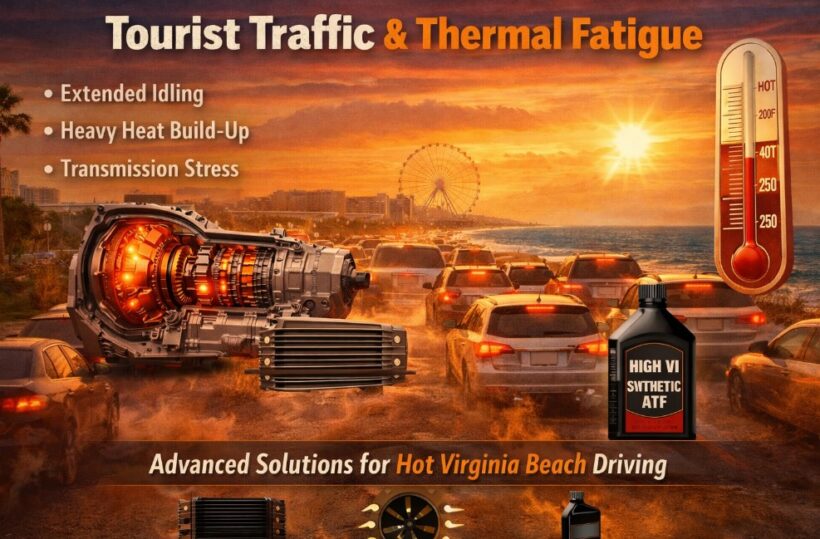
Virginia Beach traffic patterns are seasonal but severe. Prolonged idling and crawling traffic push drivetrains into thermal territory they weren’t designed to live in for hours at a time.
Why transmissions suffer most:
- Torque converters stay unlocked longer
- Heat shears fluid viscosity
- Internal seals harden prematurely
Where repair specialization shows:
Rather than waiting for failure, seasoned mechanics design solutions. Auxiliary transmission coolers, recalibrated cooling strategies, and high-viscosity-index synthetic fluids help systems survive real-world heat loads. This isn’t aftermarket improvisation—it’s applied engineering, adapted to local operating conditions.
5. Sand Ingress and Precision Component Wear
Coastal sand is finer than most people realize. When wind, traffic, and low-quality filters combine, microscopic abrasion becomes inevitable.
Subtle but costly effects include:
- Intake valve and cylinder wall scoring
- Contaminated MAF sensor readings
- Valve body solenoid restriction during service
The professional difference that is critical for such an intervention:
Top-tier Virginia Beach shops treat drivetrains like controlled environments. They favor OEM-spec filtration, meticulous intake sealing, and contamination-free transmission service practices. Cleanliness isn’t aesthetic—it’s mechanical preservation. Precision here protects tolerances that modern engines and transmissions can’t afford to lose.
6. Winter Brine That Lead to Electrical Ghost Failures
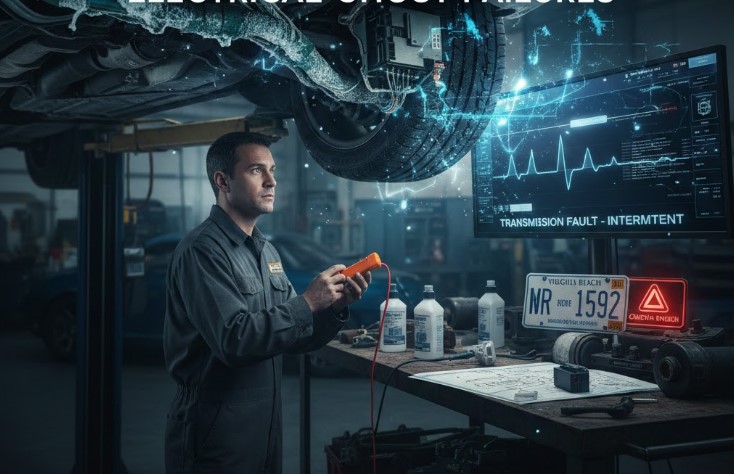
Virginia Beach winters may be mild, but liquid brine is aggressive. It clings, creeps, and corrodes in places solid salt never reaches.
Why diagnostics get complicated:
- Electrical resistance increases gradually
- Intermittent transmission codes appear and vanish
- Mechanical components are often blamed incorrectly
Advanced diagnostic skillset includes:
Experienced technicians lead with electrical load testing and harness integrity checks before condemning major components. Understanding ground paths, voltage drop, and signal integrity becomes essential. This is where professionalism protects clients—accurate diagnosis prevents unnecessary rebuilds and builds long-term trust.
Also, note that; while Virginia Beach is exempt from the biennial emissions testing required in Northern Virginia, the state-mandated Annual Safety Inspection still requires a fully functional exhaust system and dashboard check. Salt-induced electrical ‘ghosts’ that trigger a Check Engine Light won’t just ruin your drive—they can prevent you from obtaining your new inspection sticker, effectively grounding your vehicle by law.
7. Deployment Storage and Re-Commissioning Risks
Virginia Beach’s military presence creates a unique ownership pattern: long-term vehicle storage followed by immediate daily use.
Common post-storage damage realities include;
- Oil drains from upper engine components
- Transmission seals shrink and harden
- Immediate leaks and wear occur on startup
This is how repair experts leverage a disciplined re-entry process:
Specialists treat returning vehicles as systems waking from dormancy. Oil systems are manually primed, seals conditioned, and pressure introduced gradually. This thoughtful re-commissioning mindset reflects maturity in service philosophy—respecting the machine’s timeline, not just the owner’s schedule.
8. Flight Path Effect: JP-5 Exhaust Acidification and Polymer Degradation
If you operate or invest in vehicles anywhere near NAS Oceana’s flight corridors, there’s an environmental variable most service manuals never mention. The repeated launch cycles of carrier-based aircraft release trace amounts of unburned JP-5 fuel and sulfur-heavy exhaust particulates. These microscopic residues don’t stay airborne for long. They settle—quietly—on engine bays, wiring, seals, and sensors.
Why this matters locally:
- The residue forms a mildly acidic film when mixed with coastal humidity
- Rubber polymers lose elasticity, becoming brittle and cracked (“blooming”)
- Vacuum lines develop hairline leaks that trigger drivability issues
- External transmission linkage seals shrink, inviting moisture intrusion
Where specialized repair expertise shows up:
High-caliber Virginia Beach technicians don’t chase symptoms; they expose causes. Advanced smoke testing is used to reveal micro-leaks invisible to visual inspection. Preventively, silicone-based dielectric barrier sprays replace cosmetic rubber dressings, creating a chemical shield rather than surface shine. Many also specify activated carbon air and cabin filters, engineered to trap heavier hydrocarbons before they contaminate airflow sensors. This is regional intelligence applied with precision—maintenance informed by proximity, not guesswork.
In essence, specialized car repair interventions are vital because Virginia Beach acts as a “natural laboratory” for accelerated vehicle aging. In this environment, a standard maintenance schedule is often insufficient to prevent catastrophic failure. The “Expertise Gap” requires a shift from standard repair manuals to environmental forensic mechanics who have mastered chemical literacy and advanced diagnostics like smoke machines to find salt-oxidized electrical ghosts. That helps prioritize preventative shielding to stop coastal decay before it triggers a $5,000 failure.True expertise lies in knowing how to defend that system before the “anatomy” of the vehicle begins to break down.
