
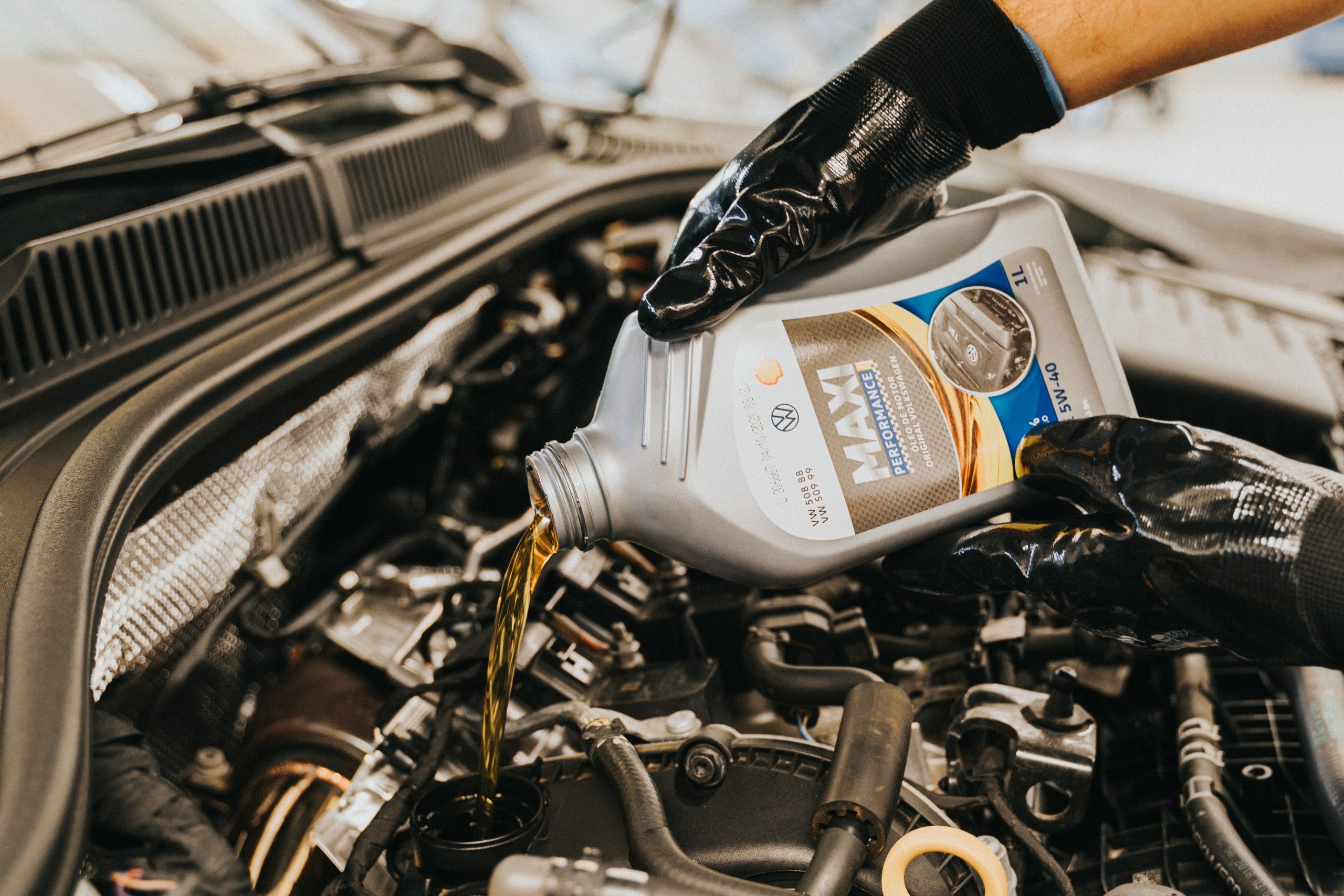
Choosing the right engine oil plays an important role in keeping your engine protected and performing at its best. Two of the most common options are full synthetic engine oil and semi-synthetic engine oil. While both are designed to lubricate and protect your engine, they differ in formulation, performance, and service life.
Understanding these differences, along with your vehicle manufacturer’s recommendations, can help you choose the engine oil that’s best suited to your car and driving conditions.
What “Full Synthetic” and “Semi-Synthetic” Actually Mean
The terms full synthetic and semi-synthetic refer to the type of base oil used to make the engine oil. This difference in formulation affects how the oil performs.
Full Synthetic Engine Oil

Fully synthetic engine oil is made using advanced synthetic base oils that are engineered for consistent performance. These oils perform well across a wide range of temperatures.
Some of the characteristics of this oil are:
-
Maintains stable viscosity in both hot and cold temperatures.
-
Resists oxidation and slows sludge formation.
-
Provides a strong lubricating film to help reduce wear.
-
Supports cleaner engine operation.
-
Suitable for many modern, turbocharged, and high-performance engines, where recommended by the manufacturer.
Semi-Synthetic Engine Oil
Semi-synthetic engine oil, also known as synthetic blend or part-synthetic oil, combines conventional mineral base oils with synthetic base oils. Compared to conventional oil, it provides better protection against engine wear, improved temperature stability, and cleaner engine performance.
Some of the characteristics of this oil are:
-
Better wear protection than conventional engine oil.
-
Improved thermal stability and oxidation resistance.
-
Helps keep the engine cleaner by reducing deposits.
-
A practical choice for many everyday driving conditions.
Full Synthetic vs Semi-Synthetic Engine Oil: What’s the Difference

The difference between full synthetic and semi-synthetic car oil becomes more noticeable in everyday driving. While both are designed to lubricate and protect your engine, they can perform differently depending on how and where you drive. Here are some factors where the difference is most clear:
Does Every Car Need Full Synthetic Engine Oil?

Not every car requires full synthetic engine oil. The right choice depends on your vehicle manufacturer’s recommendations and your engine’s requirements
Your owner’s manual is the best source for the correct engine oil specification. Manufacturers thoroughly test different lubricants before recommending the one that provides the right balance of protection and performance for a specific engine. Moreover, using a different viscosity than recommended may affect lubrication and engine performance. Always follow the specification in your owner’s manual. For additional guidance on oil quality marks and recommendations, consult the API Motor Oil Guide.
Your owner’s manual typically includes the following information:
-
Viscosity Grade: For example, SAE 5W-30 or 15W-50.
-
Oil Type: Fully synthetic engine oil, semi-synthetic, or another approved formulation.
-
Performance Specifications: Such as API, ACEA standards, or JASO standards.
-
Oil Capacity: The amount of oil required during an oil change, with or without replacing the oil filter.
Cost vs Protection – Is the Price Difference Worth It

Full synthetic engine oil generally costs more than semi-synthetic oil because of its advanced formulation and performance benefits. However, the overall value depends on how well the oil meets your vehicle’s requirements and how long it maintains its protective properties.
If your vehicle manufacturer recommends full synthetic motor oil, it means that your car’s engine engine is designed to benefit from the performance and protection that this type of oil provides. This can help reduce maintenance needs over the life of the vehicle.
Semi-synthetic engine oil is a more affordable option compared to full synthetic and more protection compared to conventional oil. It performs well for everyday driving but may require more frequent oil changes than full synthetic motor oil.
Hence, instead of focusing only on the synthetic oil price, it is important to consider factors such as your vehicle’s requirements and driving habits, and long-term maintenance needs. For related guidance on keeping an engine in good condition, see this guide to car maintenance.
Conclusion
Choosing between full synthetic and semi-synthetic engine oil depends on your vehicle’s requirements, driving conditions, and the recommendations provided by the manufacturer. Full synthetic oil offers advanced performance and longer-lasting protection in many modern engines and semi-synthetic oil provides a practical balance of performance and affordability for everyday driving.
You can explore Castrol’s engine oil range, which includes different formulations to meet various driving needs. For example, Castrol EDGE is a full synthetic advanced engine oil designed for high performance and protection. Castrol MAGNATEC is a premium engine oil range available in different formulations, including full synthetic and semi-synthetic options, designed to provide enhanced protection for everyday driving conditions.
