
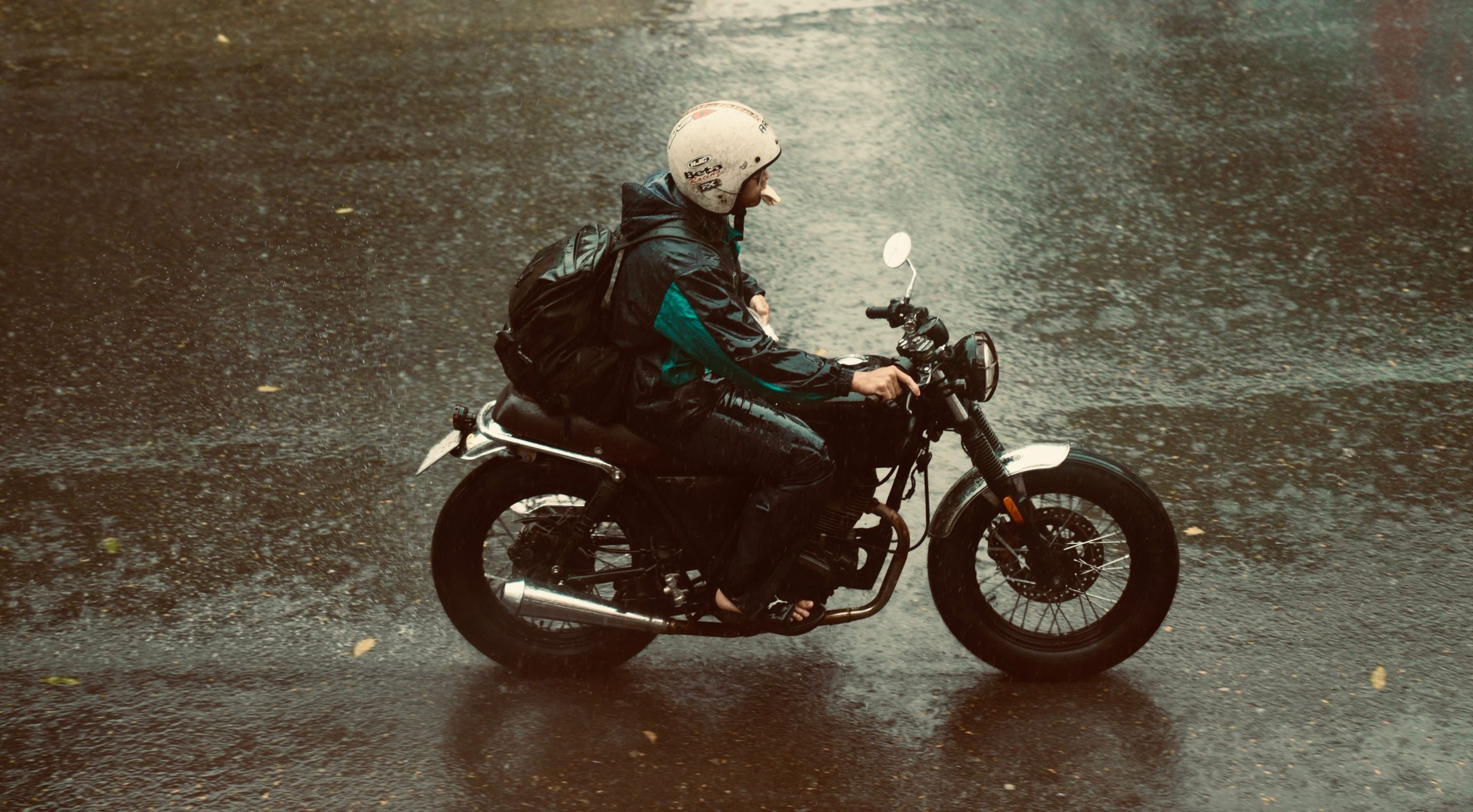
Most riders build their gear around a forecast, and they buy for the wrong risk. They fixate on waterproofing, treat it as the whole job, and then the day changes shape four times. The rain arrives late. And what actually endangers them is rarely a damp jacket – it is that they cannot see, or that nobody can see them.
Unpredictable weather is not a rain problem. It is a vision and traction problem that happens to arrive with rain.
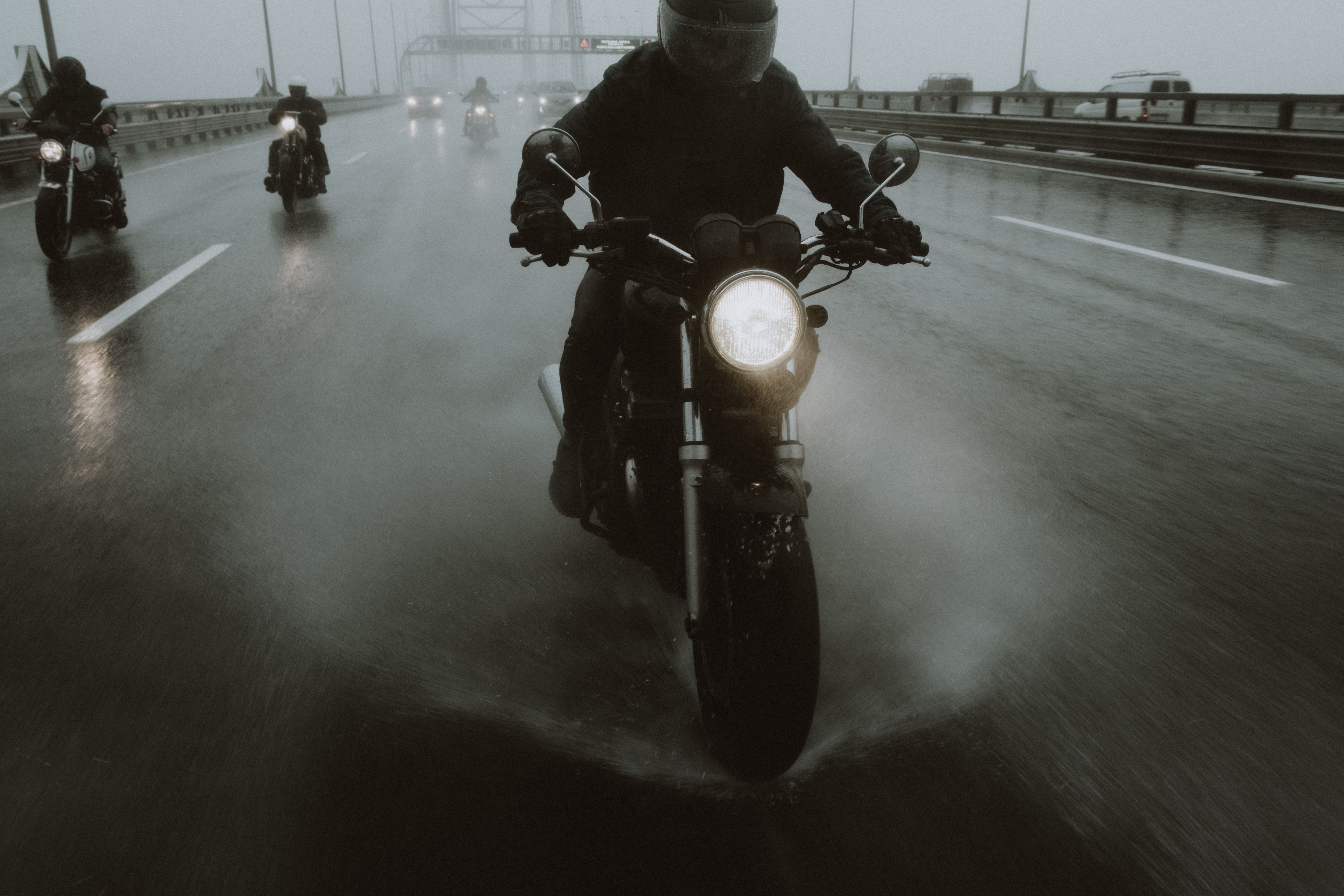
The first ten minutes of a storm are the ones that bite
Here is the pattern most riders never hear. An EU-funded analysis of powered two-wheeler crashes across Austria, Greece and Italy found that more than 90% of rider fatalities happened on dry roads. Rain cuts how much people ride far more than it cuts their skill, so the raw crash count drops.
The danger lives in the transitions. Crash risk climbs in the first minutes of a rain spell, when road dust, oil and tyre residue mix with water into a slick film before it washes away, and it rises again on the first wet day after a long dry stretch. The study of weather and powered two-wheeler accidents also found intersection collisions grow more common as rainfall intensifies.
My read: this is why the gear that matters most buys you vision and time during a passing front, not just dry socks.
Read the label before you trust the waterproof rating
European riders have had a genuine standard to shop by since 2020: EN 17092, which grades abrasion, tear and seam strength by class. It sorts garments into AAA, AA, A, B and C. The uncomfortable part is that plenty of waterproof commuter shells are only Class A – tested at a simulated 45 km/h slide in the most exposed zones.
| Class | Zone 1 abrasion test | Typical use |
|---|---|---|
| AAA | 120 km/h simulated slide | Track and fast touring |
| AA | 70 km/h simulated slide | All-round road riding |
| A | 45 km/h simulated slide | Lightweight urban gear |
Source: EN 17092:2020 test speeds as explained in Dainese’s certification guide, checked September 2026.
I would rather ride in a Class AA shell that leaks a little than a fully sealed Class A jacket, because comfort you can fix with a mid-layer and skin you cannot.
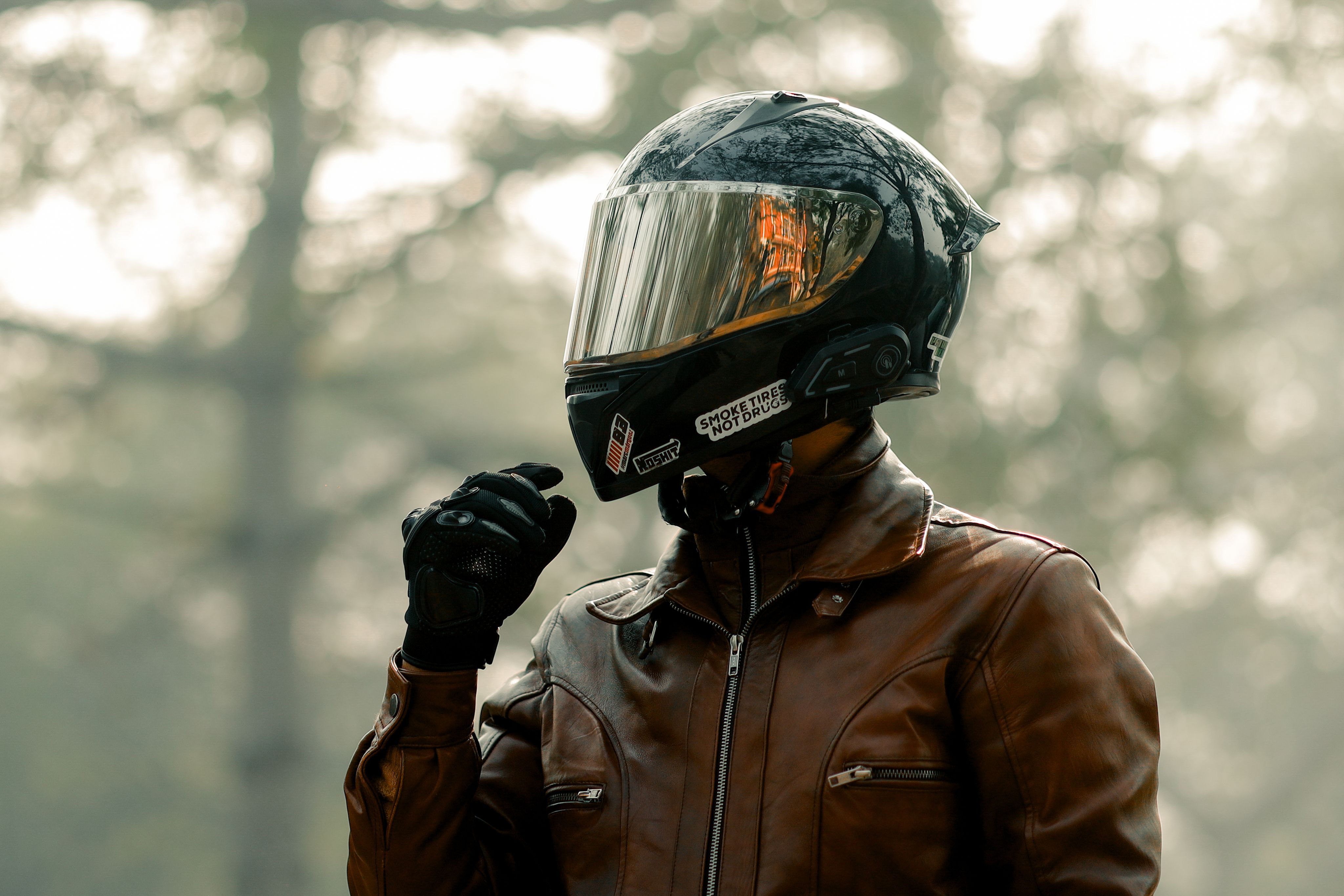
Your helmet is working harder than anything else you wear
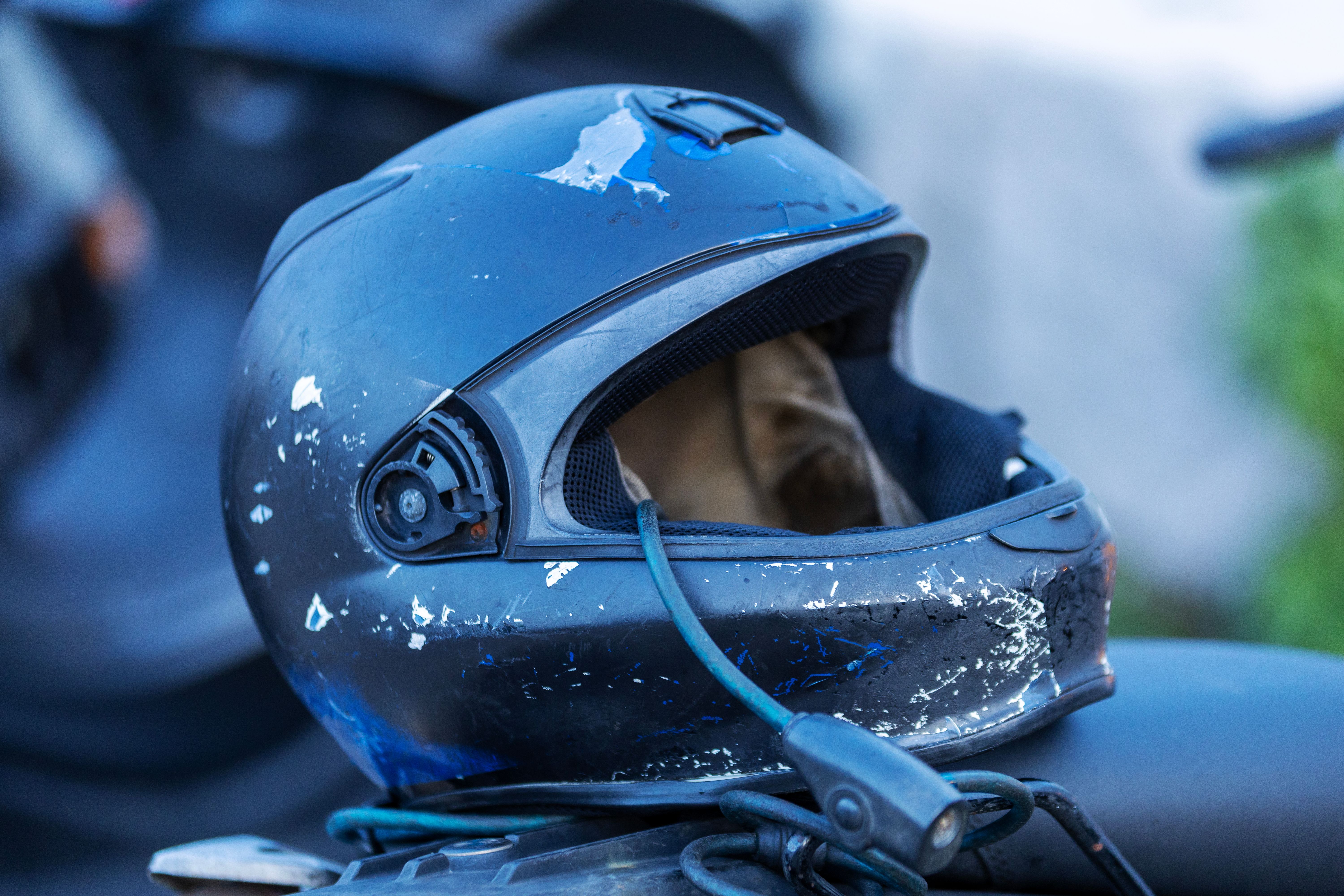
Since 2023, new helmets sold in Europe must meet ECE 22.06, and it is a bigger step than it sounds. The revision added rotational (oblique) impact testing, a chin-bar load test for full-face lids, more impact points and a roll-off test. The US DOT standard is largely self-certified and includes no rotational testing at all.
Then there is the fog. A visor mists because warm, moist breath meets cold plastic. The double-pane Pinlock insert, with its moisture-absorbing inner lens and silicone seal, is not marketing vapour – independent fog tests consistently rank it above sprays. Its trade-off is a faint halo around lights at night, so fit it cleanly and keep it clean.
Wind protection is the upgrade nobody plans for
Wind is the quiet tax on a long wet ride. Constant buffeting drains focus, chills your core and keeps spraying water across your visor. This is where a proper screen earns its place: the touring windshields and adjustable wind deflectors sold at motorcyclescreens are shaped to push airflow over the helmet rather than into it. Less buffeting means steadier hands, clearer vision and more useful riding time in the cold.
Hands and feet: where waterproofing can quietly reduce safety
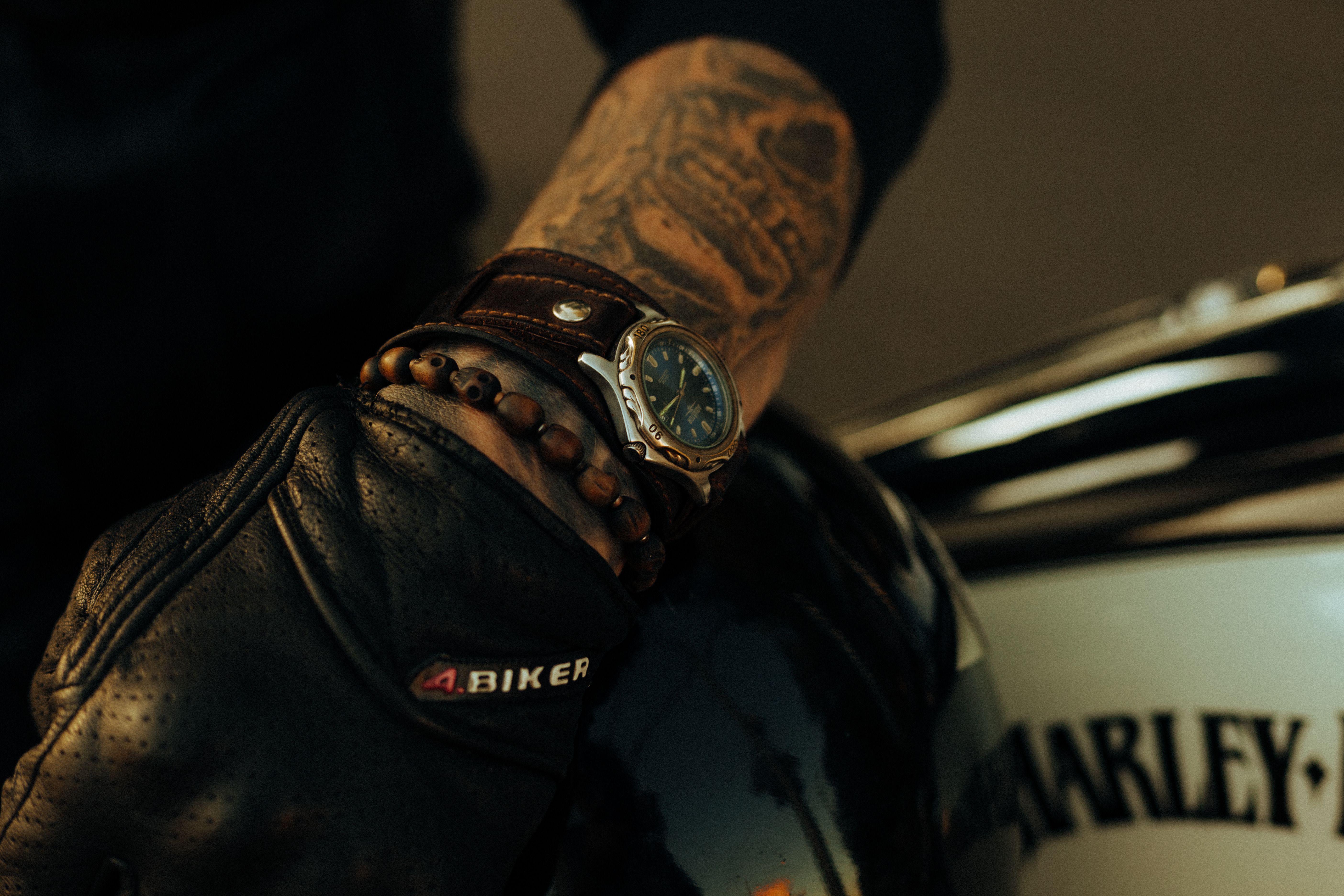
Gloves carry their own standard, EN 13594. Level 1 requires a 15 mm cuff and 25 N of restraint; Level 2 demands a 50 mm cuff, 50 N of restraint and mandatory knuckle impact protection. The catch is that the warmer and more waterproof a glove gets, the more dexterity it surrenders – and you brake with those two fingers.
Boots certified to EN 13634 are the other half. Look for ankle inserts and a shifter pad. A waterproof membrane keeps your feet warm and, more importantly, stops your foot sliding off a wet peg.
Be the thing other drivers notice
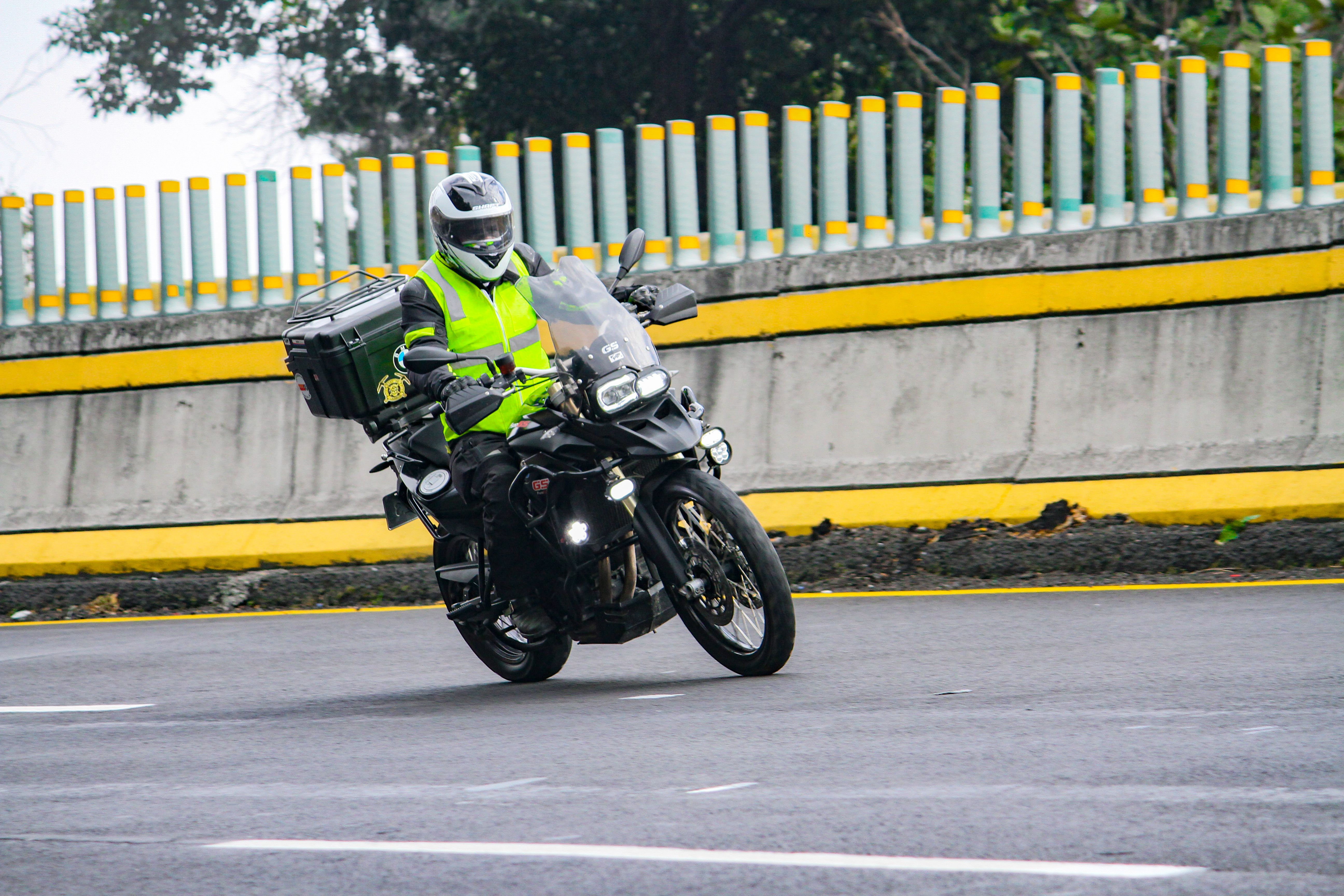
When spray fills the air and every windscreen is a blur, being seen becomes an active defence. A reflective vest with retroreflective panels is the cheapest upgrade in your kit – it throws light back at the car behind you long before they register your tail light. I will not pretend hi-vis is magic, but on a grey afternoon it is the only element working in your favour that costs almost nothing.
A layering plan for a day that changes four times
Skip the single all-weather jacket. Build three layers you can add and shed: a moisture-wicking base, an insulating mid-layer you can stow, and a certified waterproof shell that still packs small. Carry two glove weights, a spare pair of dry socks in a sealed bag, and a clear – not tinted – visor for dull light. The point is to adjust to the day, not to guess it.
FAQ
Is rain actually more dangerous for motorcyclists?
Less exposure, more intrinsic risk. Some 90% of rider fatalities occur on dry roads, but the first minutes of rain, and the first wet day after a dry spell, are the riskiest moments because of the oil-and-water film on the surface.
What is the most important piece of kit?
A correctly fitted ECE 22.06 helmet, because head injury is the most fatal. Abrasion-rated clothing matters next, then gloves.
How much does CE abrasion class really matter?
Enormously. Class AAA is tested at a simulated 120 km/h slide, AA at 70 km/h and A at just 45 km/h in the highest-risk zones. Match the class to the speeds you genuinely ride.
Do I need a Pinlock insert?
If you ride in cold, damp or wet conditions, yes. A fogged visor is a blindfold. Independent testing finds the double-pane insert far more consistent than anti-fog sprays, though it can create faint reflections at night.
Are waterproof gloves automatically safer?
No. Warmth and waterproofing trade against dexterity, and you brake with two fingers. Choose EN 13594 Level 2 protection first, then waterproofing you can still feel the controls through.
How this article was put together
I based the certification claims on EN 17092:2020, EN 13594:2015 and EN 13634, plus manufacturer and standards-body summaries of their test methods, checked in September 2026. The weather-crash findings come from a published EU analysis of powered two-wheeler accidents. Where a figure is widely repeated but unsourced, such as the exact share of crashes blamed on fogged visors, I left it out. Standards and helmet regulations change over years rather than months, but recheck classes against the current revision whenever you buy.
